


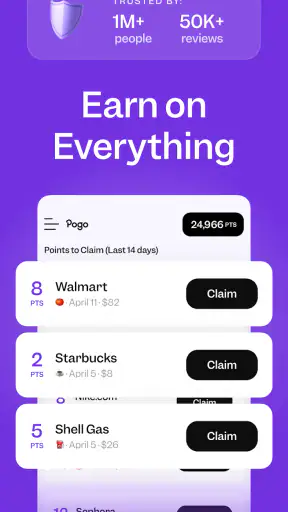
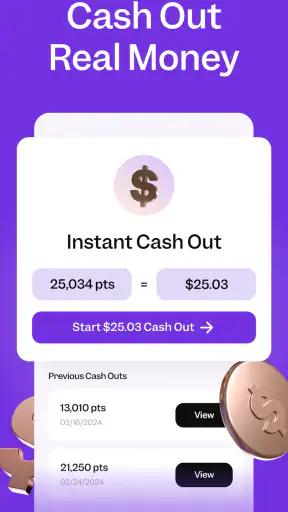
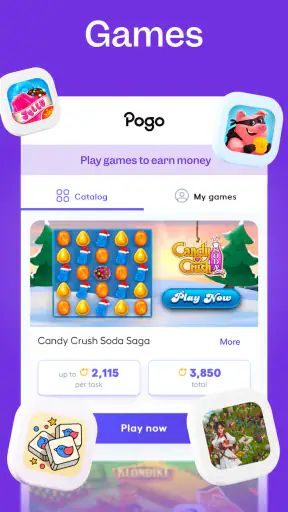
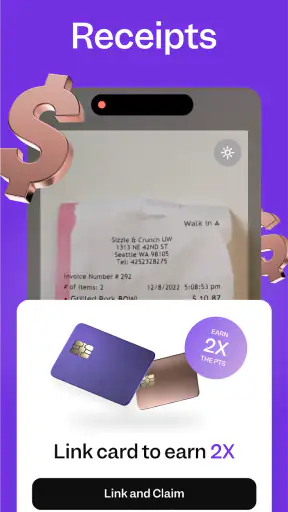
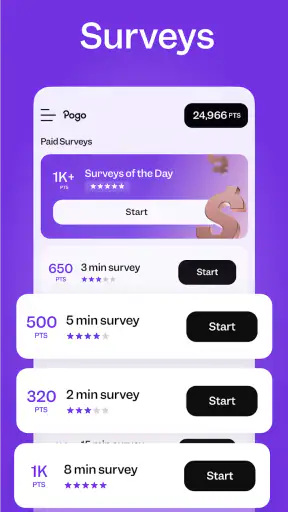
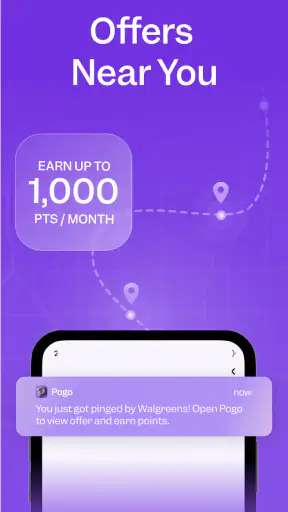

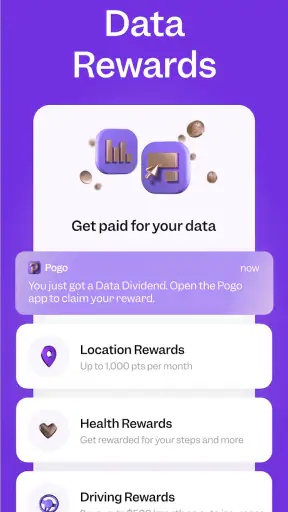
I approached Pogo: Earn Cash & Rewards as a shopping companion rather than a traditional coupon app. Its basic idea is simple: you use several parts of the app, including games, surveys, receipt activity and other reward opportunities, then work toward cash back or rewards. That combination makes it more flexible than a service built around only one kind of task, but it also means the experience depends heavily on how much effort you are willing to put in.
My main question was not whether it can produce rewards in theory. It was whether the time spent opening offers, answering questions, saving receipts and checking progress feels reasonable in everyday life. I also looked at where it fits beside the usual alternatives: retailer loyalty programs, receipt-scanning apps, survey services, and cash-back tools tied to online purchases. The answer is fairly clear. Pogo is most appealing when you want one place to try several earning routes, but it is less convincing if you want completely automatic savings or a predictable return for every action.
How I would decide whether Pogo fits
The first decision point is your preferred kind of reward activity. Some people are happy to answer short surveys while waiting for an appointment. Others would rather scan a receipt after grocery shopping, play a game for a while, or complete an offer connected to a purchase. Pogo brings these paths together, so you are not forced to rely on just one category. In my experience, that variety is its most important practical advantage.
The trade-off is attention. A retailer loyalty card can apply a discount in the background once it is set up. A receipt app may ask you to photograph one proof of purchase and move on. Pogo asks you to choose among opportunities and keep an eye on which activities are worth your time. I would therefore judge it by effort per reward, not by the word “cash” alone.
It is free to use, which makes trying it relatively easy. The app comes from Pogo Technologies Inc and sits in the shopping category, although its activities reach beyond ordinary product browsing. Its mature age classification of 17+ is worth noticing before installation, particularly for households where a younger person might otherwise assume that a rewards app is suitable for them.
Another useful criterion is consistency. Reward apps can be tempting when you imagine using every available option, but most people will not do that every day. I found it more realistic to treat Pogo as a small routine: check what is available, complete only the tasks that match my situation, and avoid changing my normal shopping habits simply to chase a reward. That approach makes the app easier to evaluate honestly.
What the first setup tells you
The app has been available since late 2020, so it is not a brand-new experiment. Its current version is 4.52, and the large user base gives it a level of familiarity that newer reward apps may not have. The store shows more than a million installs, an average rating of 4.6, roughly 127 thousand ratings, and about 14 thousand written reviews. Those figures suggest that many people find the concept useful, although they do not guarantee that every survey, offer or receipt experience will suit every user.
During an initial session, I would resist the urge to start every available activity. Instead, I would look at the different sections and identify which ones naturally fit my week. If I already keep receipts, receipt-based rewards require little behavioral change. If I dislike surveys, there is no reason to force myself through them simply because they are visible. This small bit of discipline is important because the app can otherwise turn spare minutes into a long sequence of low-value decisions.
I would also make a personal rule about information and permissions before using any shopping rewards service. Read each screen carefully, understand what an activity asks you to submit, and only provide details you are comfortable sharing. That is not a criticism unique to Pogo; it is sensible whenever an app connects shopping behavior, surveys and rewards in one account. The mature rating reinforces the need for an adult to make that judgment rather than handing the app to a child.
Where the combination of activities works well
The strongest part of Pogo is the ability to switch modes. A receipt can be useful after a normal shopping trip, while a survey may fit a quiet moment and a game may appeal when you want entertainment rather than another shopping task. I like this better than an app that becomes useless whenever there are no eligible purchases, because there may be another type of activity available to explore.
A realistic example would be a weekly grocery shopper who already saves digital or paper receipts. After unpacking the groceries, that person can make receipt submission part of the same routine instead of treating it as a special project. Later in the week, a short survey might fill a waiting period. The important point is that the app works best when rewards are attached to activities you were already willing to do.
Games create a different kind of appeal. They can make the earning process feel less like paperwork, but they also introduce the biggest risk of losing track of time. I would never begin a game offer with the assumption that every minute is equally valuable. If the activity stops being enjoyable, the reward alone may not justify continuing. This is one of the places where Pogo’s flexibility can become a weakness: more choices do not automatically mean better value.
The same applies to surveys. They can be convenient when you have a few spare minutes, yet personal relevance and length can vary. I would start with a clear stopping point rather than answering indefinitely. If a survey becomes repetitive or asks questions I do not want to answer, leaving it is a reasonable choice. A rewards app should fit around my day, not take control of it.
Three practical habits that improve the experience
My first useful habit would be to separate “already happening” activities from “extra effort” activities. Submitting a receipt from a normal shop is usually easier to justify than making an unnecessary purchase for a possible reward. Likewise, answering a survey during idle time may be acceptable, while interrupting work or family time for a small task is not. This simple distinction prevents the reward balance from becoming a misleading measure of value.
Second, I would check the app at deliberate times instead of repeatedly opening it throughout the day. A quick review after shopping and another when I have genuine free time is enough for most people. This reduces notification fatigue and makes it easier to compare an activity with its real opportunity cost. The best reward workflow is usually boring and repeatable, not constant.
Third, I would keep my expectations modest until I understand which activity types suit me. Do not assume that a game, survey or receipt will feel equally worthwhile. After a week or two, you can identify the sections you actually use and ignore the rest. That is a more reliable way to judge Pogo than trying to maximize every visible opportunity.
A less obvious trade-off is that variety can make tracking harder. When rewards come from different actions, it is easy to remember the attractive possibility and forget the time spent getting there. I recommend keeping a rough mental or written note of the activities completed during your first few sessions. You do not need complicated accounting; simply compare how the app feels against the time you gave it. If the routine feels like work, the flexibility is not helping you.
Where Pogo wins, and where another option may fit better
The situations in which Pogo has the edge
Pogo makes the most sense for someone who wants a broad rewards toolkit rather than a single-purpose service. If you shop regularly, occasionally enjoy surveys, and are open to game-based activities, having those choices in one app is convenient. You can adapt to the day instead of waiting for one specific kind of offer.
It is also a reasonable starting point for a person who has never used a rewards app. The free price removes an obvious barrier, and the familiar shopping context is easier to understand than a complicated investment or cashback system. I would describe it to a friend as a low-risk experiment: install it, test the activities that match your routine, and keep it only if the process feels worthwhile.
The public response is another encouraging sign. An average of 4.6 from around 127 thousand ratings, together with more than a million installs, indicates that Pogo has reached a substantial audience. I would still treat those numbers as context rather than proof of a guaranteed outcome. Reward apps are personal; the same service can feel efficient to a receipt-focused shopper and tedious to someone who dislikes surveys.
The developer’s choice to combine games, surveys, receipts and other earning routes gives the app a broader identity than a standard store loyalty program. That breadth is useful when your shopping patterns change. A month with fewer purchases does not necessarily make the entire app irrelevant if another activity type suits you better.
When the usual alternatives are better
If your only goal is automatic savings at one retailer, a store’s own loyalty program may be the cleaner choice. It can keep discounts close to the checkout process, while Pogo requires you to return to a separate app and complete reward activities. For a person who values simplicity above variety, that extra step may not be worthwhile.
If you want a receipt-only workflow, a dedicated receipt service may feel more focused. You photograph the proof of purchase, finish the task and leave. Pogo is broader, but that breadth can feel like unnecessary clutter when receipts are the only feature you care about. The same principle applies to survey specialists: a dedicated survey app may be preferable if you want to spend all your reward time answering questions and comparing survey opportunities.
Online shoppers who already use a familiar purchase-linked cashback service may also have little reason to switch. Those tools can be better when the main behavior is clicking through before buying online. Pogo is not automatically a replacement for every category of savings tool; it is better understood as a flexible supplement or general-purpose rewards option.
There is also a personality question. People who dislike tracking, photographing receipts or making decisions between small offers should probably skip Pogo. The app cannot remove the basic work involved in earning through these activities. Likewise, anyone expecting a guaranteed hourly return will likely be disappointed, because the value of a task depends on its length, relevance and whether it fits naturally into the day.
The real cost of switching
Switching to Pogo is technically easy because the app is free, but the practical cost is learning a new routine. You need to notice which activities interest you, remember to submit receipts when appropriate, and decide which offers deserve your time. If you already use several reward services, adding one more can create account clutter rather than convenience.
I would avoid abandoning a tool that already works well until Pogo proves its place in your routine. Run both briefly if that is comfortable, but compare them by effort and usefulness rather than by the size of a displayed balance. A reward that requires a special shopping trip, repeated checking or an activity you dislike may be less valuable than a smaller benefit earned automatically elsewhere.
There is a second switching cost: habit formation. Receipt rewards are easy to miss if you leave the receipt in a bag or forget about it after shopping. Game and survey opportunities can be equally easy to overuse because they are available during idle moments. Setting a fixed check-in time and a personal limit keeps the app from expanding into every spare minute.
For privacy-conscious users, the cost is also about comfort. Before committing to a rewards routine, review the information requested during each activity and decide whether the exchange feels fair to you. If the questions or shopping-related steps make you uneasy, no reward amount will make Pogo the right choice. Choosing not to participate in a particular activity is part of using the app responsibly.
My recommendation after weighing the trade-offs
I recommend Pogo to adults who want to experiment with several kinds of rewards and are comfortable treating the app as occasional extra value rather than income. It is particularly suitable for someone who already keeps shopping receipts, has small pockets of free time, and enjoys choosing between surveys, games and other activities. The free entry point makes that trial practical, while the mature age rating means it should be approached as an adult-oriented service.
I would not recommend it as the only savings tool for someone who wants automatic discounts, a completely passive experience or a highly predictable return. In those cases, a retailer loyalty program, a focused receipt app or a purchase-linked cashback alternative may fit better. Pogo’s strength is range, not guaranteed simplicity.
My best advice is to begin narrowly. Use the activity that matches something you already do, observe how much attention it takes, and add another category only if the first routine feels comfortable. Do not buy products you do not need, do not continue a game or survey purely because you have started it, and do not confuse a growing balance with good value unless the time feels justified.
Overall, I see Pogo as a useful shopping rewards app with a sensible place in a broader money-saving routine. Its mix of receipts, surveys, games and other opportunities gives it more flexibility than a single-purpose alternative, but that flexibility asks for judgment. If you want a menu of options and can set your own limits, I think it is worth trying. If you want savings to happen quietly in the background, I would choose something more specialized and leave Pogo out of the routine.


